







From the Field to the Lab: WATERSENS Partners Get Hands-On with Water Sampling
Have you ever wondered what happens between collecting a water sample and analysing it in the laboratory?
A few weeks ago, WATERSENS partners met in Santander for a hands-on water sampling and sample preparation workshop organised by Jorge Rodriguez Hernandez (Universidad de Cantabria), Ruben Diez Montero (Universidad de Cantabria), Anna Bogush (Coventry University), Thomas Karlsson (University of Copenhagen), and Diego Cicero Fernández (Asociación RIA) at the Astillero demonstration site.
The objective was practical: to learn how to collect water samples correctly, understand the equipment and procedures involved, Health and Safety aspect, prepare the samples for transport and further laboratory analysis.
The workshop started at the Environmental Engineering laboratory of the University of Cantabria, where the organising team, together with laboratory technicians and PhD students, and project partners prepared the sampling bottles and equipment.
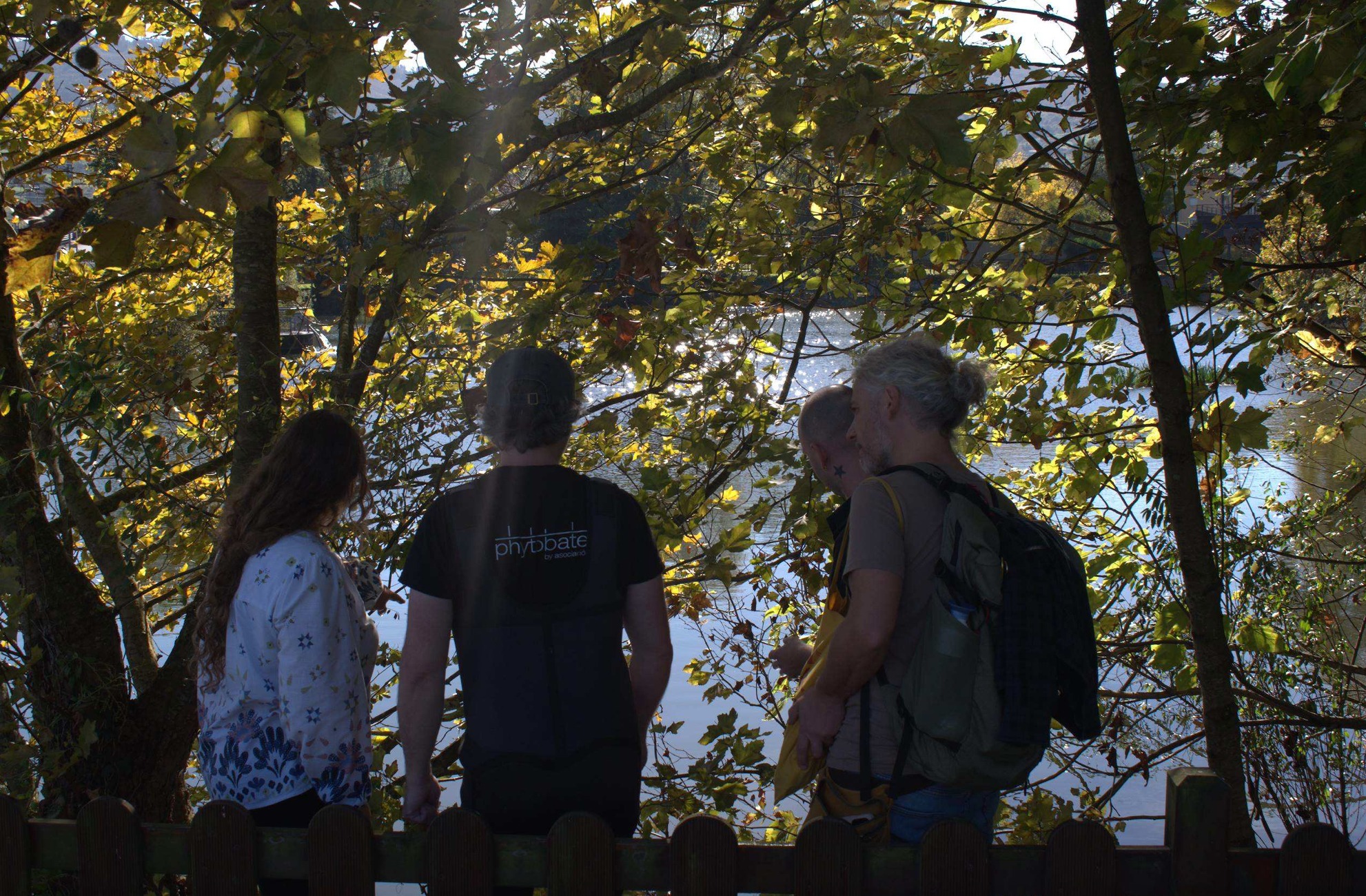
The group then travelled to Astillero, where partners also had the opportunity to see Phytobatea, the Floating Treatment Wetland technology developed by Asociación RIA. The system is being tested at the demonstration site to support water quality improvement and biodiversity in an area heavily affected by human activity.

Under the guidance of Thomas and Anna, partners used a telescopic water sampler to collect the required water volumes for two different Standard Operating Procedures (SOPs). SOP1 focuses on the analysis of chemicals of emerging concern (CECs) at the University of Copenhagen, while SOP2 is used for the analysis of microplastics at Coventry University.

Preparing the samples correctly is an essential part of the process. For SOP1, the samples undergo two main steps in the laboratory: first, filtration through coarse and fine filters, followed by Solid-Phase Extraction (SPE), which concentrates the chemicals of emerging concern onto a cartridge with sorbent material. For SOP2, the main preparation step is preservation with prefiltered hydrogen peroxide.

Once all procedures were completed, the samples were carefully packed in protective and cooled containers and prepared for shipment to Denmark and the United Kingdom, where WATERSENS partners will carry out the next stage of laboratory analysis.
So, partners — are you ready for the next round of sampling?
The workshop provided partners with a valuable opportunity to experience the full sampling process first-hand, from preparation and field collection to sample preservation and shipment, while strengthening collaboration between the teams involved in water quality monitoring across the project.